
Home/What We Treat/Heel Pain and Plantar Fasciitis
Serving Boise and the Greater Treasure Valley
Heel Pain and Plantar Fasciitis Treatment in Boise, Idaho and the Treasure Valley
If your first steps in the morning feel like stepping on a nail, that has a name, a cause, and a treatment path that almost never involves surgery.
Most new patients are seen within a few days.
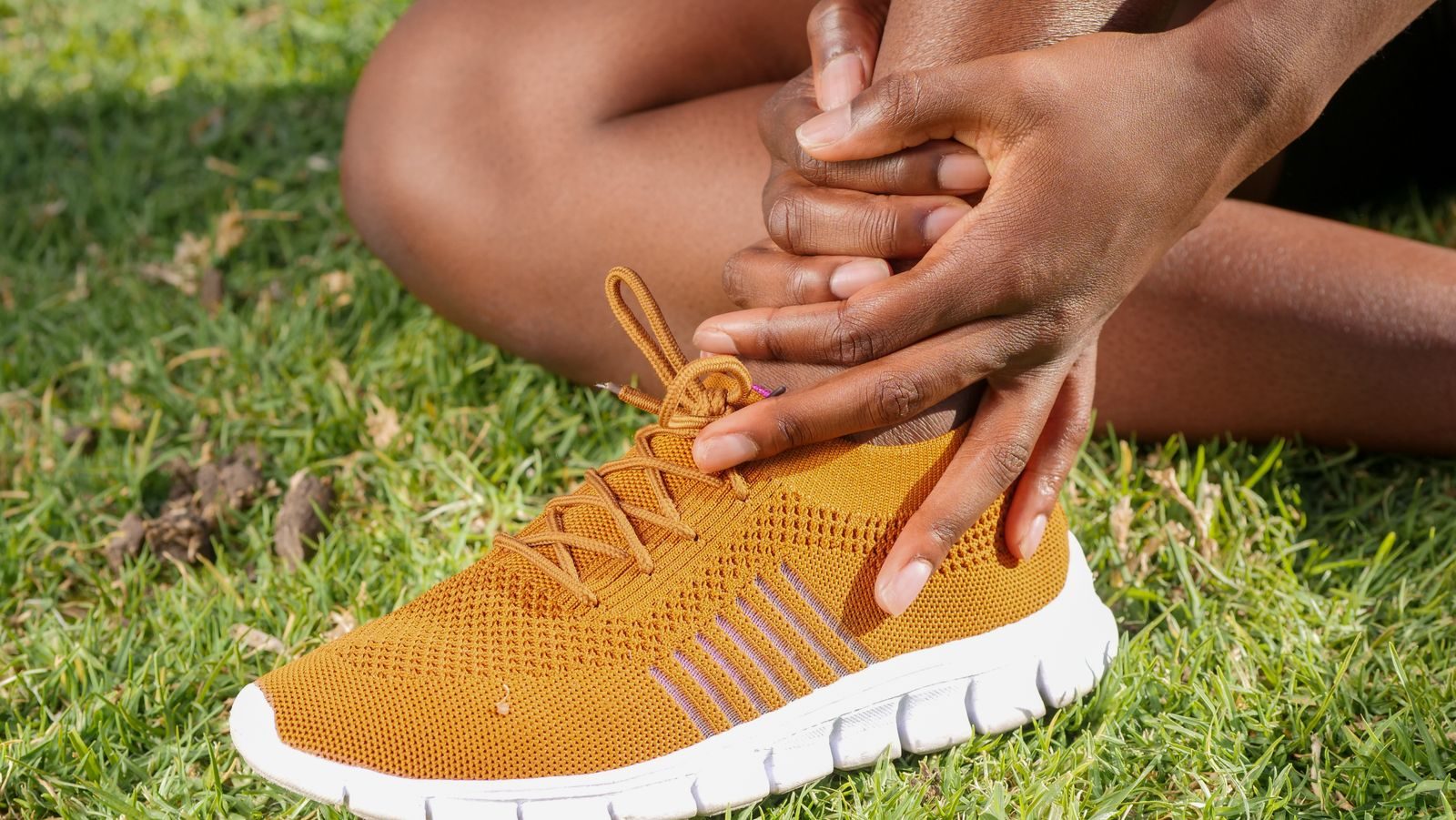
Diagnosis at your first visit
Heel pain has five common causes and an exam sorts them in one visit.
Most patients improve without surgery
Stretching, taping, custom orthotics and bracing come first.
Shockwave, laser and red light in office
SoftWave shockwave, Remy laser and red light therapy for stubborn cases, with no downtime.
One doctor, start to finish
You see Dr. Moyer at every visit.
The Morning Pattern
Why plantar fasciitis hurts most in the morning
The single most useful thing you can tell a podiatrist about heel pain is when it hurts.
If the worst pain of your day is your first few steps out of bed, eases after ten or fifteen minutes of walking, and returns after you have been sitting a while, that pattern points hard at plantar fasciitis. It is not random. It is the mechanism showing itself.
The plantar fascia is a thick, rope-like band running along the bottom of your foot from heel to toes, supporting your arch and absorbing load with every step. When it gets overloaded, by mileage, weight change, unsupportive shoes, tight calves, or mechanics that strain it, small tears develop where it anchors into the heel bone.
Overnight that injured tissue tightens and begins knitting together in a shortened position. Your first steps stretch and re-tear that fragile repair, which is the stab you feel. Then it warms up, the pain eases, and the cycle resets when you sit.
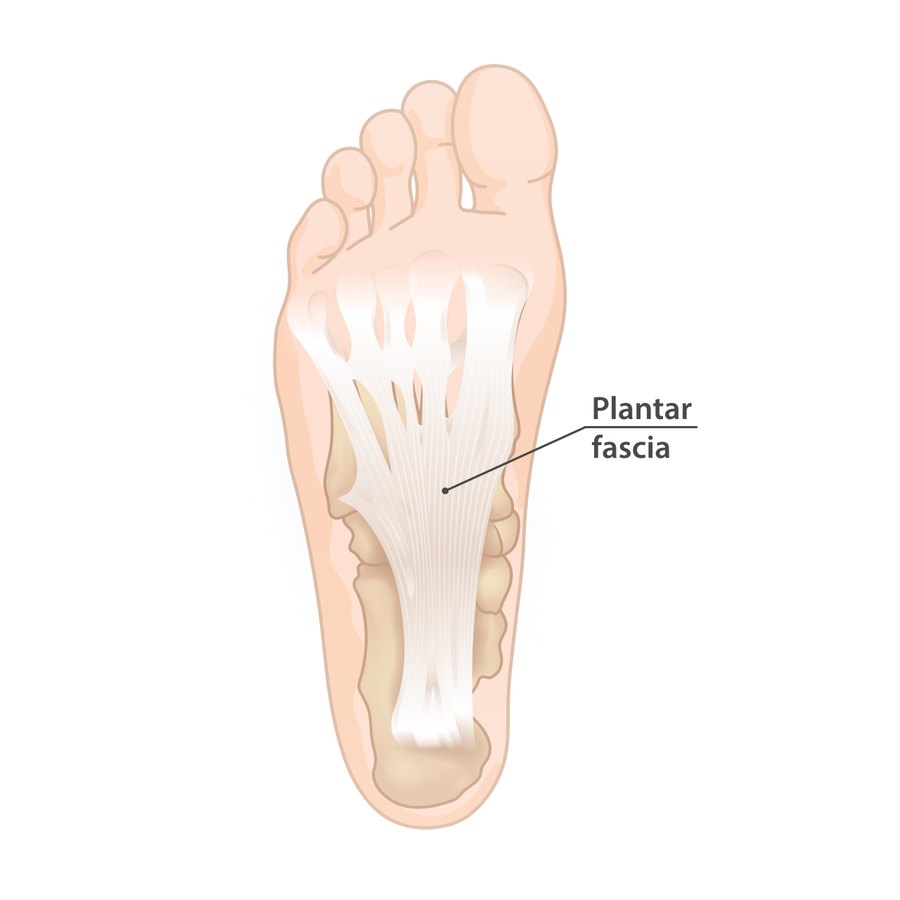
Illustration: Injurymap (injurymap.com/free-human-anatomy-illustrations). CC BY 4.0.
First few steps
out of bed are the worst pain of the day
10 or 15 minutes
of walking and the pain eases
After sitting
the pain returns and the cycle resets
Every normal day of walking re-injures the healing tissue. That daily loop is why waiting it out takes so many months, and why treatment that breaks the loop works so much faster.
Getting the Diagnosis Right
Common causes of heel pain, and how they differ
Heel pain gets blamed on heel spurs constantly. The real source is usually soft tissue overload, tendon irritation, nerve irritation, poor mechanics, or repetitive stress. Getting the diagnosis right matters because the right treatment depends entirely on the cause.
| Condition | Where it hurts | Signature pattern |
|---|---|---|
| Plantar fasciitis | Bottom of the heel, into the arch | Worst first steps in the morning, eases with movement |
| Achilles tendinitis or tendinopathy | Back of the heel, up the cord | Stiff at the start of activity, sore afterward |
| Heel fat pad pain | Directly under the heel, deep bruise feeling | Worse barefoot on hard floors; loss of the heel’s natural cushion |
| Nerve irritation | Inner heel, often burning or tingling | Can worsen with rest too; includes Baxter’s nerve entrapment |
| Stress injury | Deep in the heel bone | Steadily worsens with activity, aches at night |
About heel spurs: the spur on your X-ray is usually a bystander. Plenty of pain-free feet have spurs and plenty of miserable heels have none. The spur grew where the fascia pulls. Treating the fascia is what brings relief.
In children and adolescents, heel pain is usually Sever’s disease, an irritation of the growth plate rather than the fascia. Different problem, different treatment, very good outlook. See the pediatric page.
Home Remedies
What you have probably already tried
Rest, which helped, right up until you returned to your life and the heel returned to hurting.
The honest assessment: those are the right instincts, and for a fresh case a disciplined version of that program resolves most people. Where it breaks down is consistency, precision, and stage. A stretch done briefly and occasionally does not lengthen a tight calf. A generic insole does not offload your specific fascia. A case that has been re-tearing daily for eight months has degenerated past what a pharmacy aisle can reach.
That is a staging problem, not a discipline problem.
When to Come In
When to see a podiatrist for heel pain
Come in when heel pain has persisted despite sensible home care; when the first-step pain is intense or worsening; when it has changed how you walk, because a limp exports the problem to your knee, hip, and back; when it is costing you running, work comfort, or sleep; or when you are tired of negotiating with your own heel every morning.
Early cases are far faster to resolve than ones that have been left to wait.
Mornings should not hurt.
Call 208.361.3668 or request an appointment online.
Evaluation
How your heel pain is evaluated
Your evaluation identifies the painful tissue, the contributing biomechanics, and the treatment most likely to work, and may include a detailed history, physical examination, gait and biomechanical assessment, footwear evaluation, and weight-bearing X-rays.
Advanced imaging such as MRI or ultrasound is used only when clinically indicated, which for most patients means not at all.
Treatment Options
Heel pain treatment options, in order
There is no one-size-fits-all plan. Most patients improve without surgery.
First-line care
Footwear and activity modification
Precise and temporary, aimed at keeping you moving rather than benching you.
Stretching and strengthening
Specific fascia and calf protocols, dosed and progressed rather than done occasionally. Calf flexibility is the most under-treated driver of stubborn heel pain.
Strapping and taping
Offloads the fascia immediately, and helps confirm the diagnosis. When taping helps, the fascia is the problem.
Custom orthotics
Prescription orthotics with fasciitis-specific corrections change the daily load on the fascia. That is what interrupts the re-injury loop and keeps the result from being temporary.
Bracing
Braces that hold the foot in position to allow proper stretching and provide relief.
Escalation, for stubborn cases
Injection therapy, only after conservative care
Injections come into the plan once conservative care has not worked, not at the first visit. Dr. Moyer tries to avoid steroid injections because cortisone can weaken the fascia, and preserving the fascia is the priority. When cortisone is the right tool, it is limited to two or three injections before moving on to other options. A regenerative injection such as Wharton’s jelly is another option for stubborn cases, covered on the regenerative medicine page.
Extracorporeal shockwave therapy (ESWT)
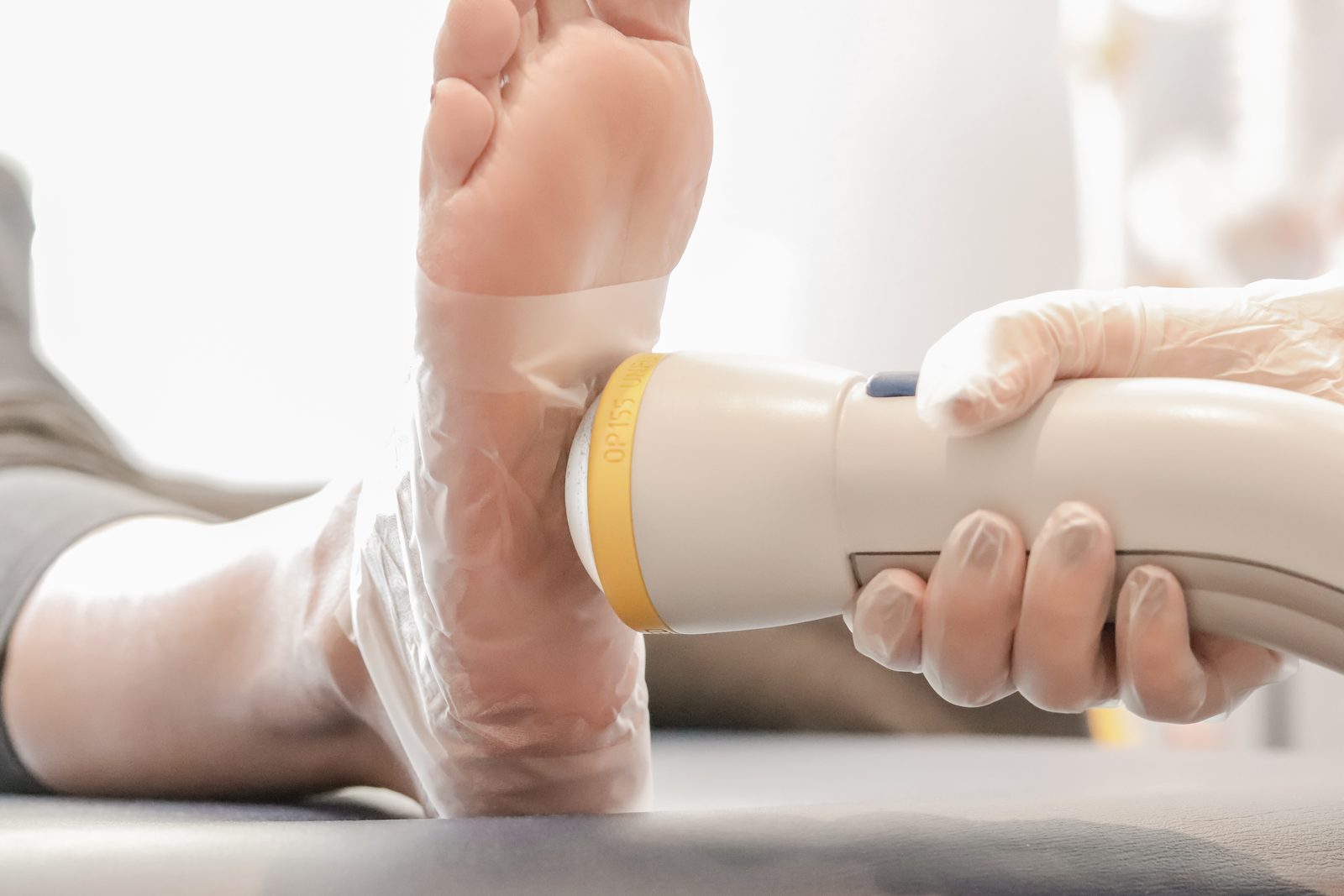
For chronic cases that have not responded to conservative care, shockwave uses acoustic waves to stimulate degenerated tissue to heal rather than simply quieting the pain. The practice uses a SoftWave device. A typical course is one session a week for four weeks, followed by a four-week pause to evaluate the response before deciding on next steps. Athletes may start shockwave sooner. No needles, no medication, no downtime. It can be very effective for selected chronic conditions. Generally a cash service.
Remy Class IV laser therapy
A non-invasive option for appropriate soft tissue conditions, with no needles and no downtime.
Red light therapy
Also called photobiomodulation. A light-based treatment for soft tissue and musculoskeletal pain, available in the office, with no discomfort and no downtime.
Other regenerative options
For select chronic cases, injectable treatments such as PRP and Wharton’s jelly may be discussed. What these are and who they suit is covered on the regenerative medicine page, written without outcome promises.
Surgery, only after conservative care has been exhausted
The overwhelming majority of plantar fasciitis resolves without an operating room, and the entire ladder above exists to keep it that way.
Prevention
Why heel pain comes back
Heel pain returns when treatment focuses only on reducing the pain instead of correcting what caused it. An injection that quiets an angry fascia has done nothing about the calf tightness, the footwear, or the mechanics that overloaded it in the first place.
That is why the plan here always includes the unglamorous parts: biomechanics, strength, flexibility, footwear, and a long-term prevention strategy.

You will be told directly which of those are permanent habits rather than temporary ones.
Recovery
What plantar fasciitis recovery looks like
Weeks 1 to 2
At your first visit the diagnosis is confirmed and your treatment plan is outlined and started, including taping and a stretching program. For most patients mornings are already improving, which is the early signal the plan is right.
Weeks 2 to 6
Follow-up visits to check your progress. Orthotics arrive and take over the offloading. Stretching compounds. Activity gets reintroduced progressively rather than banned.
Weeks 6 to 12
Most first-line patients are functionally normal. Chronic cases may move on to shockwave or other advanced treatment, which is evaluated after the course is complete.
Preventive maintenance
The orthotics, footwear habits, flexibility, and strength that resolved it are what prevent its return.
Recovery timelines vary with the diagnosis and the severity, and you will get yours rather than an average.

Why Riverside
Why patients choose Riverside
Riverside Foot and Ankle is Dr. Dustin Moyer’s practice, and that is not a technicality. You see him at every visit, he performs your procedure himself, and he handles your follow-up. Dr. Moyer graduated from Eagle High School and Boise State, trained and practiced in the Seattle area, and came home to build the kind of practice he wanted to work in: evidence-based, unhurried, and honest about what treatment can and cannot do. The newest tools are used when the evidence supports them and skipped when it does not.
Specific to heel pain: accurate diagnosis first, then evidence-based care, custom orthotics, modern technologies where the evidence supports them, sports medicine thinking, and surgery only when it is genuinely warranted. The whole ladder is in one place, so you are not shuttled between offices while your mornings keep hurting, and you are not sold a step you have not earned.
Advanced, evidence-based, restorative care.
FAQ
Heel pain and plantar fasciitis questions
Why does my heel hurt most with the first steps in the morning?
Overnight the injured fascia tightens and starts healing in a shortened position, and your first steps re-tear that fragile repair. Its daily repetition is exactly why the condition lingers untreated.
Are heel spurs the cause of heel pain?
Not always, and usually not. Spurs appear on X-rays of pain-free feet, and painful heels frequently have none. The spur grew where the fascia pulls. Treat the fascia and the pain resolves while the spur stays put, bothering no one.
Do I need an MRI?
Usually not. Most heel pain is diagnosed by history, examination, and weight-bearing X-ray. Advanced imaging is for cases where the symptoms warrant it.
Will plantar fasciitis go away on its own?
Often, eventually. Untreated cases commonly run six to eighteen months because daily walking keeps re-injuring the tissue. Treatment collapses that to weeks for most people.
Do I need custom orthotics, or will a drugstore insole do?
For a mild, recent case, a quality over-the-counter insole is a fair first experiment and you will be told so. Recurrent or stubborn heel pain is a mechanics problem, and prescription orthotics correct the specific load pattern tearing your fascia. Cushioning comforts. Correction resolves.
Does shockwave therapy work?
It can be very effective for selected chronic conditions, particularly chronic plantar fasciitis and Achilles tendinopathy, which are its two best-studied applications. It is not a first step. It is the step for cases that have not responded to conservative care, and a typical course is one session a week for four weeks.
Are cortisone shots safe for heel pain?
Used selectively, yes, but Dr. Moyer tries to avoid them where he can, because cortisone can weaken the fascia. Injections come only after conservative care has not worked, and cortisone is limited to two or three injections before moving to other options.
Can I keep running while this heals?
Usually yes, in modified form. Taping, orthotics, surface and mileage adjustments, and a staged return protect the fascia while keeping you sane.
How long does recovery take?
It varies with the diagnosis and severity. Many patients notice mornings improving within a couple of weeks of the right program, and a fresh case commonly resolves in six to twelve weeks. Chronic cases take longer and often need advanced treatment and a specific plan.
Will I need surgery?
Most patients improve without it. Surgery comes only after appropriate conservative care has been exhausted.
Does insurance cover heel pain treatment?
Evaluation and standard treatment are covered medical care under most plans once credentialing is complete. Shockwave is the common exception: it is a cash service, and you get a quote specific to your plan before you start. Custom orthotics are covered by some plans and paid out of pocket under others.
My child has heel pain. Is this the same thing?
Usually not. In a growing child it is more often Sever’s disease, an irritation of the growth plate. Different problem, different treatment, which usually includes modifying activity and training patterns, and it resolves permanently once the growth plate closes.
Next Steps
Where to go from here
Not sure it is plantar fasciitis?
Heel pain has five common causes and an exam sorts them in one visit.
Call (208) 361-3668Already tried everything?
That is the conversation worth having. Chronic cases have options that fresh cases do not need.
Talk About Your OptionsTalk to Riverside Foot and Ankle
New patients are welcome, and most are seen within a few days.
Riverside Foot and Ankle, 671 E Riverpark Ln, Ste 110, Boise, ID 83706 · Get directions
Other Conditions We Treat

© 2026 Riverside Foot and Ankle, PLLC · 671 E Riverpark Ln, Ste 110, Boise, ID 83706 · (208) 361-3668