
Home/What We Treat/Fungal Toenails
Serving Boise and the Greater Treasure Valley
Fungal Toenail Treatment in Boise, Idaho and the Treasure Valley
Thick, yellow, crumbling toenails have a cause, and it is treatable. Here is an honest look at what works, what does not, and how long it really takes.
Most new patients are seen within a few days.
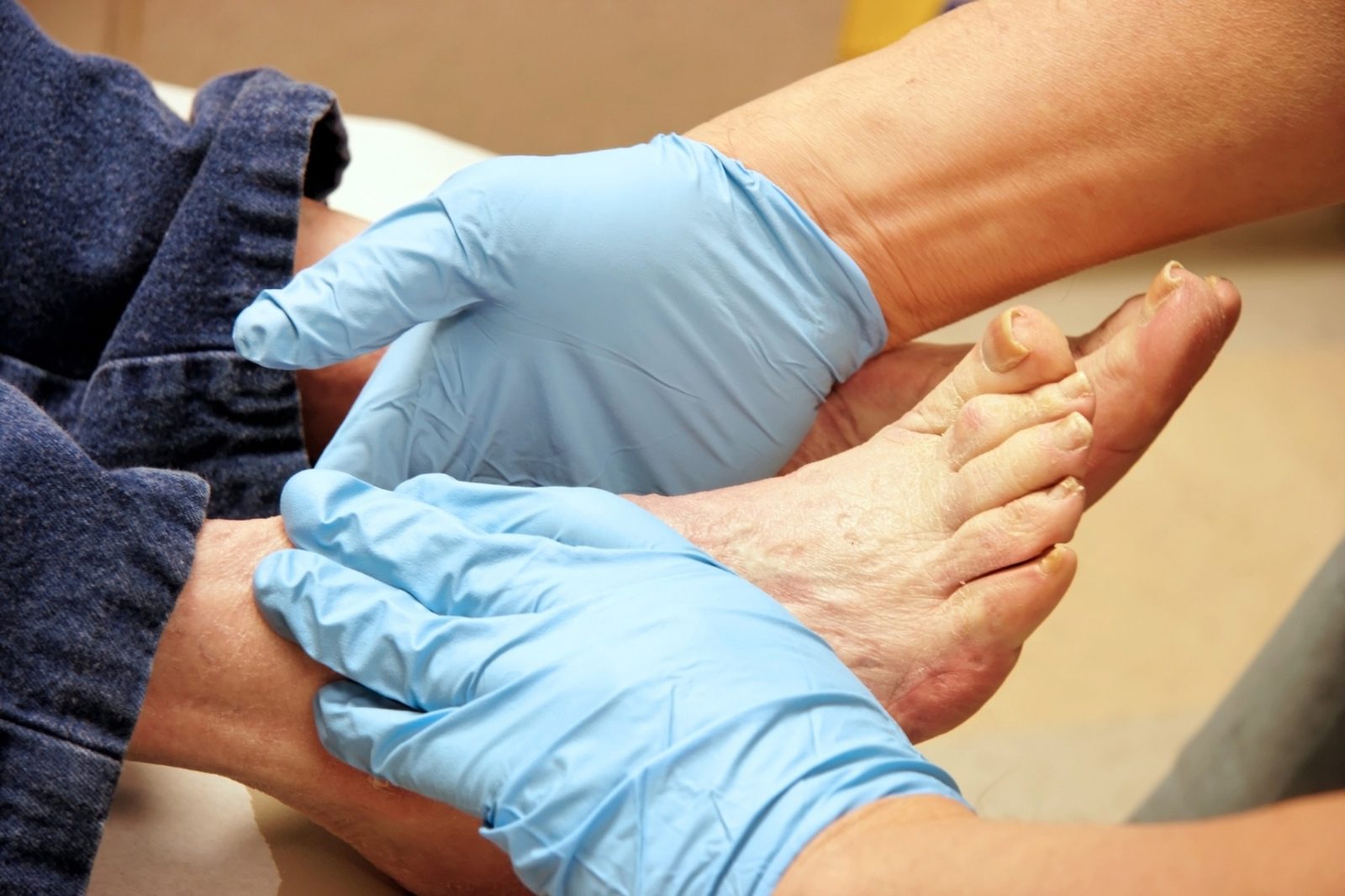
Testing at your first visit
Lab testing confirms what is causing the nail change before treatment starts.
ToeFx and Remy laser in office
Light-based and laser treatment with no needles and no downtime.
An honest timeline
Most patients need 9 to 18 months for a healthy nail to grow in.
One doctor, start to finish
You see Dr. Moyer at every visit.
Fungal Toenails
An honest look at a stubborn problem
Most people who come in about a fungal toenail have been quietly dealing with it for years. They have stopped wearing sandals, they paint over it, and they have tried at least two things from a pharmacy shelf that did nothing. Somewhere along the way they picked up the idea that nothing works and it is not worth treating.
That is half right. Plenty of what gets sold for fungal nails does not work, and the internet is full of promises no treatment can keep. But onychomycosis is a real infection with real treatments, and the reason most people fail is not that the condition is untreatable. It is that they were treating the wrong thing, treating it for too short a time, or never confirmed it was fungus in the first place.
It also helps to be clear about what you actually want.
Clear the infection
Some people want the infection gone.
A normal-looking nail
Some want the nail to look normal for a wedding or a vacation.
Relief from pain
Some are in pain.
No more ingrown nails
Some keep getting ingrown nails because the nail has thickened and curled.
Those are four different goals with four different plans, and the first conversation is about which one is yours.
What Is Happening
What causes a fungal toenail
A fungal nail infection, known medically as onychomycosis, is usually caused by dermatophytes, the same family of organisms behind athlete’s foot. They feed on keratin, the protein your nail is made of. The infection typically starts at the free edge or the side of the nail and works backward toward the base, digesting the nail plate as it goes.
That produces the pattern you recognize: thickening, yellow, white or brown discoloration, brittle or crumbly edges, debris building underneath, nails lifting away from the nail bed, and eventually a nail too thick to trim comfortably.
Here is the part that explains everything else on this page. The nail plate has no blood supply. Oral medication reaches it slowly through the nail bed, and topical medication has to penetrate a dense keratin barrier that exists specifically to keep things out. Meanwhile a toenail grows roughly a millimeter a month.
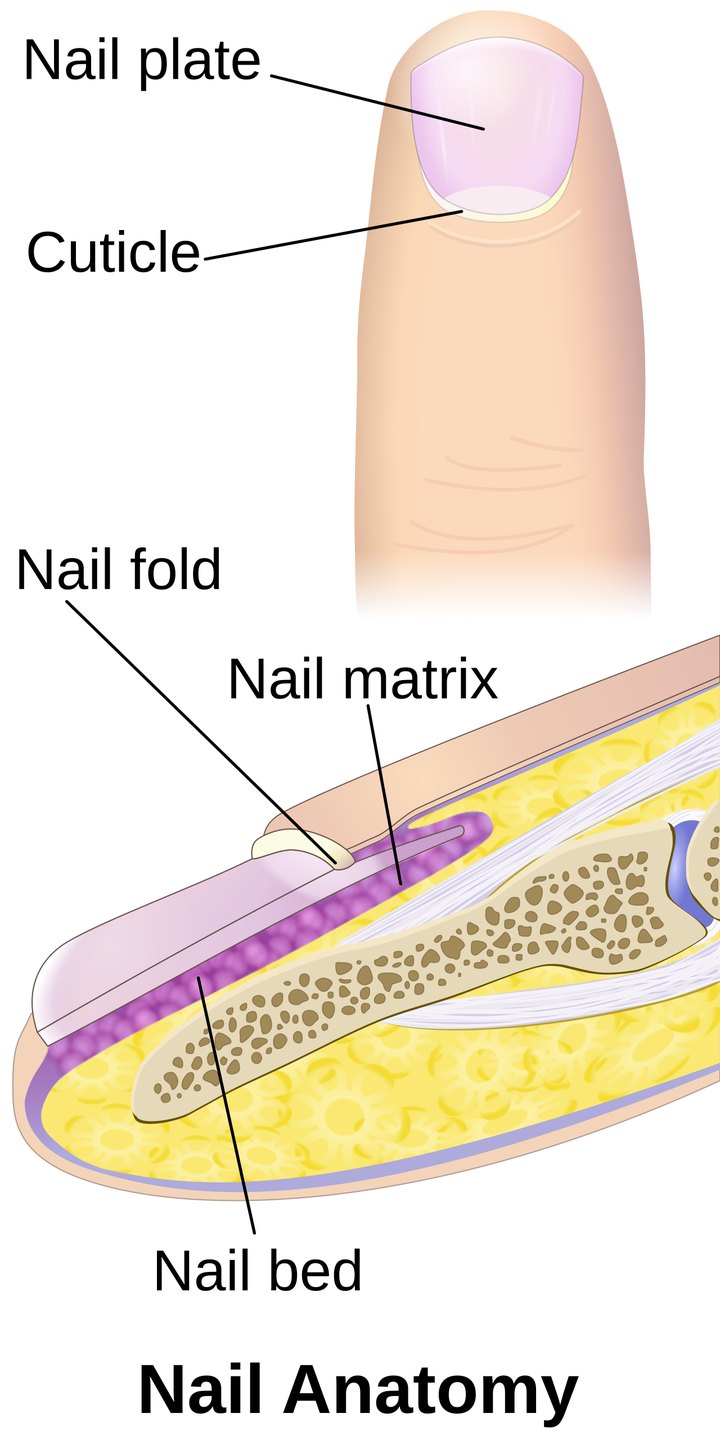
The infection lives under and inside the nail plate, which is the part of your body with the worst blood supply.
No blood supply
in the nail plate, so medication reaches the infection slowly
About 1 mm
of new toenail growth a month
9 to 18 months
for most patients to grow a fully healthy nail
That single fact is why no honest treatment produces a clear nail in a month, and why anyone promising one is selling something.
Getting the Diagnosis Right
Not every thick toenail is fungus
This is the step most often skipped, and skipping it is the biggest reason treatment fails.
Conditions that look nearly identical to a fungal nail include repetitive trauma, old nail injuries, psoriasis, eczema, nail dystrophy, age-related thickening, and, less commonly, tumors of the nail unit.
| What you see | What it might be | How it differs |
|---|---|---|
| Thick, yellow, crumbling | Fungal infection | Usually starts at one edge and spreads; often with athlete’s foot |
| Thick, ridged, dark | Old or repetitive trauma | Often a single nail; traceable to an injury, running, or years of shoe pressure |
| Pitted, oil-drop spots, lifting | Psoriasis | Often affects fingernails too; may run alongside skin psoriasis |
| Thin, ridged, splitting | Dystrophy or a systemic cause | Multiple nails changing at once |
| Dark streak or band | Needs prompt evaluation | A pigmented streak is not fungus and should never be assumed to be a bruise |
Because treatment depends entirely on the diagnosis, laboratory testing is typically done at the first visit. It confirms what is causing the nail change and sets the right course of treatment. Spending a year treating an old traumatic nail with an antifungal is exactly the experience that convinces people nothing works.
A dark or pigmented streak in a nail is not a fungal problem and should be looked at promptly. Call rather than waiting for a routine appointment.
Home Remedies
What you have probably already tried
The honest assessment: a few of these have some evidence for mild, early cases, and none are dangerous. What they share is a delivery problem. They are applied to the outside of a nail plate while the infection lives underneath and inside it. Creams formulated for skin cannot penetrate keratin, which is why they reliably do nothing for nails even though they work well for athlete’s foot on the surrounding skin.
If you have already run this list without result, that is useful information rather than a failure.
Find out what you are actually treating.
Call 208.361.3668 or request an appointment online.
Treatment Options
Fungal toenail treatment options
There is no single treatment that is best for every patient. What fits you depends on your medical history, how severe the infection is, your activity level, your cosmetic goals, your tolerance for risk, and what the current evidence supports.
Where every plan starts
Observation
Sometimes the right answer. A mild, painless nail change in someone who is not bothered by it does not always need a year of treatment, and you will be told when that is the case.
Professional nail debridement
Reducing the thickened nail is part of nearly every plan. It relieves pressure and discomfort immediately, improves shoe fit, physically removes a large share of the fungal burden, and improves how well topical medication penetrates.
Medications and supplements
Topical antifungal medications and foot soaks
For mild infections, for maintenance, or as part of a combination approach. Prescription topicals made specifically for nails are formulated to penetrate the plate rather than sit on it, and medicated foot soaks are available through the office as well. Topicals require daily application over many months, and consistency is the whole game.
Oral terbinafine
Remains one of the most effective treatments for confirmed fungal toenails, reaching the nail from the inside through the nail bed. Candidacy, side effects, medication interactions, monitoring, success rates, and recurrence prevention all get discussed using current evidence before you decide.
Supplements
Some patients are also offered a nail supplement as part of their plan. A supplement does not treat the infection on its own, and you will be told how it fits alongside the treatment that does.
In-office light and laser treatment
ToeFx photodisinfection
A light-activated treatment applied to the nail in the office, with no medication, no heat, and no downtime. It suits patients who cannot take an oral medication or would rather not, and it works well as part of a combination approach alongside debridement and topicals.
Remy Class IV laser therapy
A non-invasive laser treatment applied to the nail in the office, with no needles and no downtime. It may suit patients who prefer to avoid oral medication, or it can be used as part of a combination approach. Nail lasers are FDA-cleared for the temporary increase of clear nail in patients with onychomycosis, and that is how this treatment is presented here: one part of a plan, not a cure on its own.
For severe or curved nails
Partial or total nail removal
For severe cases, removing part or all of the damaged nail is an option when it is warranted. It is not a routine step, and it is recommended only when your nail and your goals call for it.
Onyfix
A non-surgical bracing system that corrects curved and ingrown nails as they grow. Relevant here because thickened fungal nails frequently curl and drive recurrent ingrown toenails, so treating the infection without addressing the shape leaves half the problem in place. No anesthetic and no procedure.
ToeFx or the Remy laser? Both are in the office. The choice comes down to your preference, timing, cost, the specifics of your nails, and what you expect from treatment, and Dr. Moyer will go over the trade-offs with you.
Timeline
What the timeline actually looks like
Most patients need 9 to 18 months for a healthy nail to completely replace an infected one. That is not a treatment failure, it is nail growth.
Months 1 to 3
Treatment starts. The nail looks the same, because the nail you can see was already grown before treatment began. This is where most people quit.
Months 3 to 6
A clear band appears at the base. This is the first real evidence anything is working and it is the milestone to watch for.
Months 6 to 12
The clear section advances as healthy nail pushes the damaged nail forward. Periodic debridement keeps it comfortable and removes remaining infected material.
Months 9 to 18
A great toenail is fully replaced. Smaller nails move faster.
Nobody gets a clear nail in a month. Any treatment advertised that way is describing a cosmetic covering, not a cure.
Prevention
Keeping fungal toenails from coming back
Treatment does not stop when the infection improves. Recurrence is common, and the difference between people who stay clear and people who repeat the whole process in three years is almost entirely what happens next.

Treat the athlete’s foot. Skin infection between the toes reseeds the nails constantly.
Disinfect your shoes. Your shoes hold the organism. Rotating pairs so they dry fully between wearings helps more than people expect, and a UV shoe sanitizer is available through the office as part of the nail treatment package.
Control moisture. Proper socks, and drying thoroughly between the toes.
Cover your feet in shared wet areas. Gym showers, pools, locker rooms.
Keep nails properly trimmed, and keep up with maintenance debridement if your nails thicken. Maintenance debridement is offered after the infection clears.
Bring your own instruments to the salon, or ask about their sterilization protocol.

Why Riverside
Why patients choose Riverside
Riverside Foot and Ankle is Dr. Dustin Moyer’s practice, and that is not a technicality. You see him at every visit, he performs your procedure himself, and he handles your follow-up. Dr. Moyer graduated from Eagle High School and Boise State, trained and practiced in the Seattle area, and came home to build the kind of practice he wanted to work in: evidence-based, unhurried, and honest about what treatment can and cannot do. The newest tools are used when the evidence supports them and skipped when it does not.
Specific to fungal nails: the first job is finding out what is actually causing the nail change, before committing you to a year of treatment. From there you get an honest discussion of the risks and benefits of each option, a plan built around your goal rather than a default, and a realistic timeline. Pricing for cash services is available up front, so there is no guessing about cost.
Advanced, evidence-based, restorative care.
FAQ
Fungal toenail questions
Is laser better than terbinafine?
Each has advantages and disadvantages, and many patients do best with an individualized combination. Oral terbinafine is more effective overall for a confirmed infection. Light-based treatment avoids medication entirely, which matters for people who cannot take terbinafine or would rather not. The right answer depends on your history, the severity, and how you feel about risk.
What is ToeFx?
A light-activated treatment applied to the nail in the office. No medication, no heat, and no downtime, which makes it a reasonable option for patients who cannot take an oral antifungal or prefer not to. It is often combined with debridement and a topical rather than used alone.
Does terbinafine damage the liver?
Serious liver injury is rare. A 2024 study in JAMA Internal Medicine followed nearly 7.9 million patients in the VA health system who started one of 194 medications with reported liver effects, and terbinafine was not among the 17 medications with the highest rates of severe liver injury. Your other health conditions and medications still matter, so your history gets reviewed and a decision is made about whether laboratory monitoring is appropriate for you specifically. Dr. Moyer is happy to share the study so you can read it yourself.
How long does it take to grow a healthy nail?
Most patients need 9 to 18 months for a healthy nail to completely replace an infected one. Treatment is working well before you can see it.
Can toenail fungus come back?
Yes. Preventive strategy is an important part of long-term success, not an afterthought. Treating athlete’s foot and dealing with your shoes matter as much as the original treatment.
Why did the cream from the pharmacy do nothing?
Antifungal creams sold for skin are formulated to work on skin. They cannot penetrate the nail plate, and the infection lives underneath and inside it.
Do I actually need a test? Can't you just look at it?
Experience narrows it down quickly, but many nails that look fungal are not. Testing is typically done at your first visit, because it confirms the diagnosis and determines which treatment makes sense.
My nail keeps getting ingrown. Is that related?
Often yes. A thickened fungal nail tends to curl, and a curled nail digs into the skin. Treating the infection without addressing the shape leaves half the problem. Onyfix corrects the curve non-surgically as the nail grows.
Is it contagious?
It spreads slowly, mostly through shared damp environments and within your own feet from athlete’s foot to nails. Keeping your feet dry and treating any skin infection matters more than avoiding your family.
Can I still get pedicures?
Yes, with reasonable precautions. Bring your own instruments or ask about sterilization, and skip it while the skin is broken.
Does insurance cover this?
Evaluation and medically necessary care are typically covered once credentialing is complete. ToeFx, laser treatment, and Onyfix are cash services that insurance does not cover, and their pricing is available up front.
What if it is not fungus?
Then we treat what it actually is. Knowing is better than a year of guessing.
Next Steps
Where to go from here
Not sure it is worth treating?
Come find out what it actually is. That answer alone is worth the visit.
Call (208) 361-3668Talk to Riverside Foot and Ankle
New patients are welcome, and most are seen within a few days.
Riverside Foot and Ankle, 671 E Riverpark Ln, Ste 110, Boise, ID 83706 · Get directions
Other Conditions We Treat

© 2026 Riverside Foot and Ankle, PLLC · 671 E Riverpark Ln, Ste 110, Boise, ID 83706 · (208) 361-3668